

Replica Jewelry for a Museum - Updated April 2026
Replica Jewelry for the Academy Museum Gentlemen Prefer Blondes
At Kathleen Lynagh Designs, we specialize in the research, design, and fabrication of jewelry for costumes, including historically replicas for film, theater, and museum exhibitions. Our work focuses on interpreting original pieces, often from limited visual references and translating them into designs that preserve the integrity of the original design. We want to complement the costume and match the historical time period as close as possible.
This project, commissioned by the Academy Museum of Motion Pictures, involved recreating the jewelry worn in the opening sequence of Gentlemen Prefer Blondes so the costumes could be presented as they originally appeared on screen.
Project Background
Gentlemen Prefer Blondes(1953), directed by Howard Hawks, stars Jane Russell and Marilyn Monroewith supporting performances by Charles Coburn, Elliott Reid, Tommy Noonan, George Winslow, Taylor Holmes, and Norma Varden.
The film’s memorable costumes were designed by renowned Hollywood costume designer William Travilla, whose work helped define the glamorous visual style of the production.
This project was a special commission for the Academy Museum of Motion Pictures. Kathleen Lynagh Designs was invited to recreate the jewelry worn by Monroe and Russell in the film’s opening dance sequence, "A Little Girl from Little Rock".
The Academy Museum identified these costumes as significant works of Hollywood design and commissioned the recreation of the original jewelry for its opening museum exhibition.
We must have watched this clip over a 100 times looking for every detail. Two Little Girls from Little Rock. Watch on YouTube.
Research and Jewelry Design Development
This commission from the Academy Museum was to create two identical sets of jewelry to be displayed with the red sequin dresses. The museum provided us with a selection of film stills from their library as reference material. From there, we conducted extensive visual analysis, studying both the imagery and the film itself to understand how the jewelry functioned in motion.
Because the available references did not clearly show construction details, much of the design process relied on careful observation. Movement, scale, and light reflection all informed how we interpreted each piece.
Fabrication Strategy
Working within our project budget and timeline, we developed a fabrication approach that combined sourced components with hand fabrication.
We researched jewelry findings and stones consistent with what Hollywood studios would have had access to in the early 1950s. Swarovski rhinestones and base-metal settings were selected to replicate the look and performance of the original jewelry pieces.
Where suitable components could not be found, elements were fabricated by hand in the studio.
The final jewelry set included:
Two necklaces
A hip brooch
Earrings
Wrist wraps
Cuff bracelets (added later in the project)
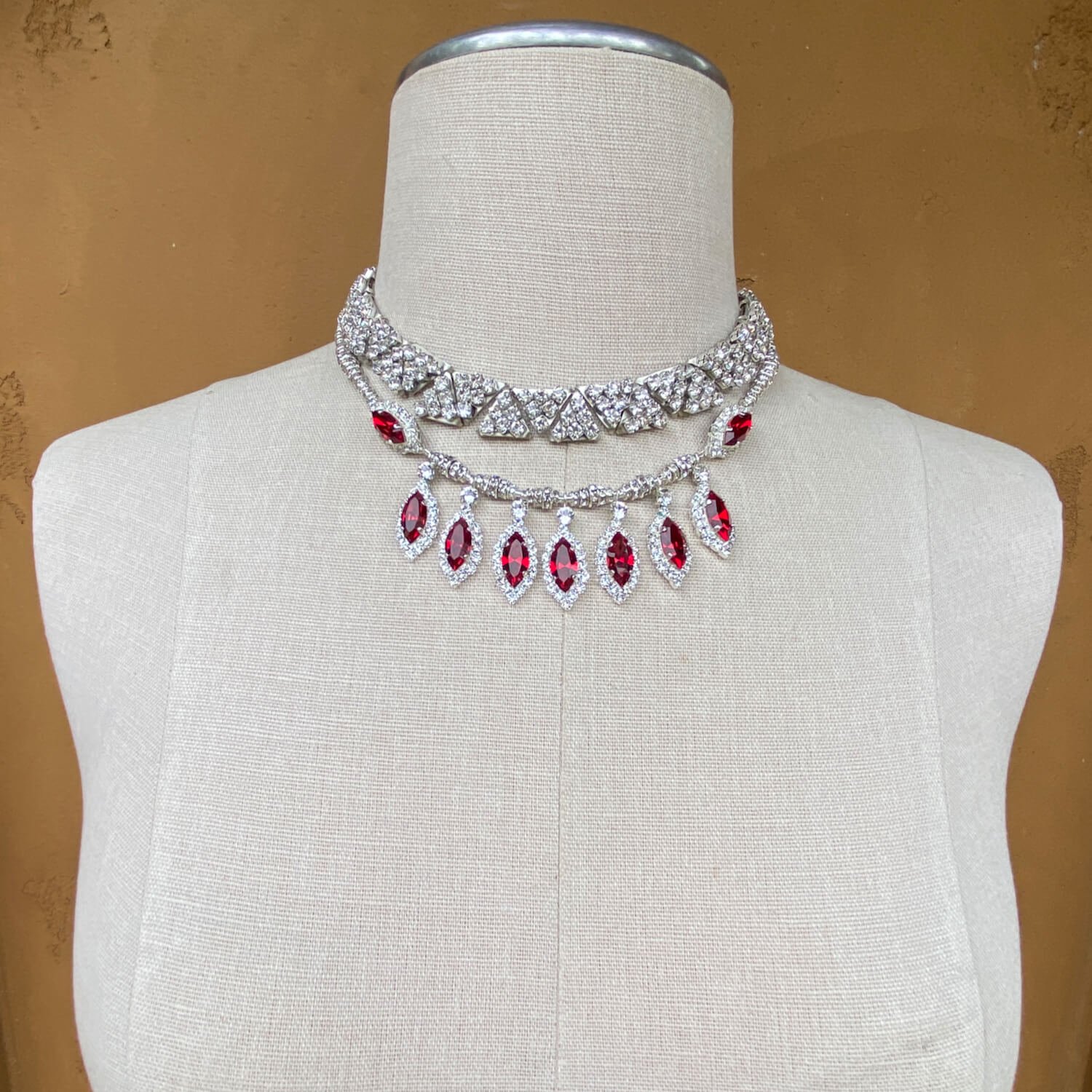
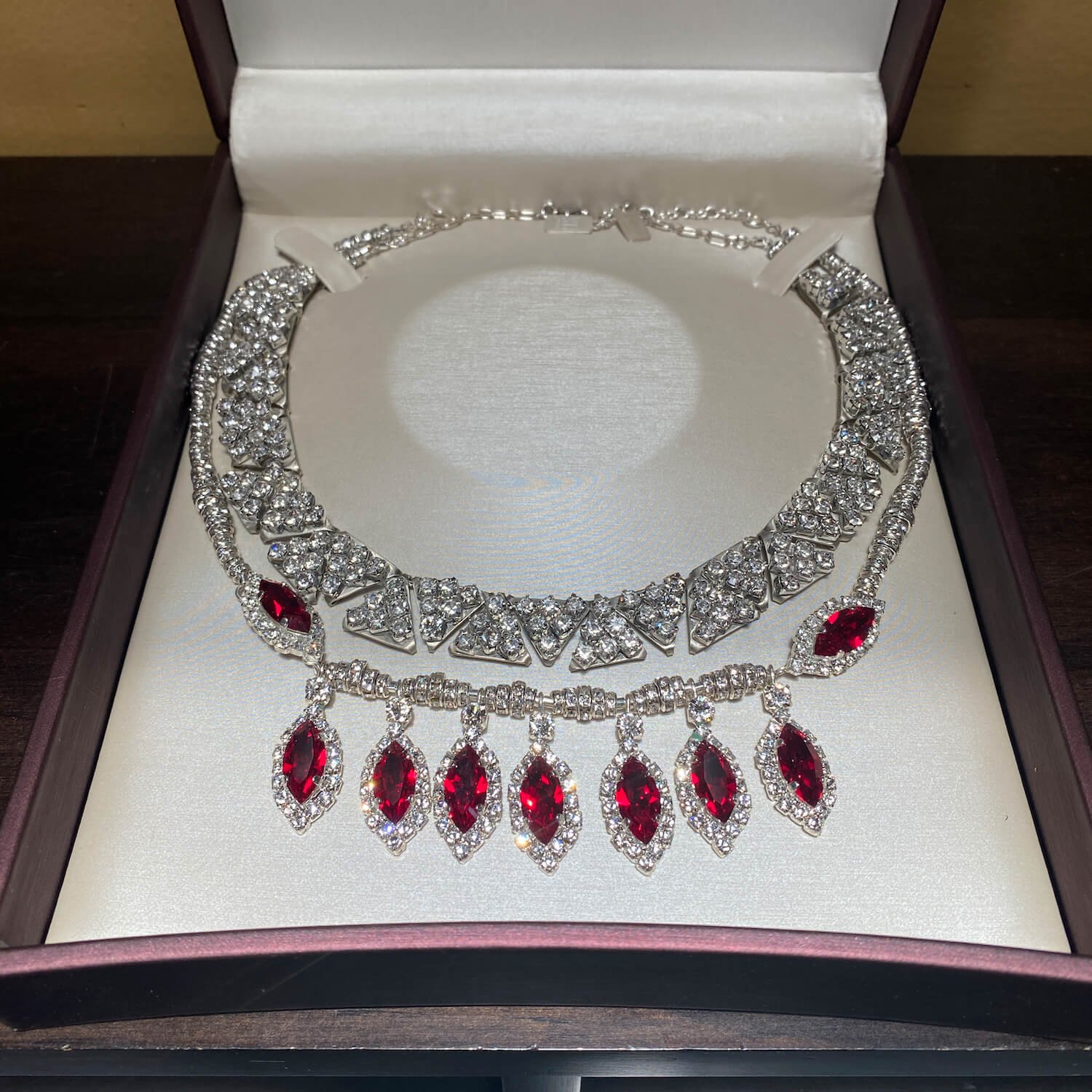
The Jewelry: Triangle Necklace and Red Drop Necklace
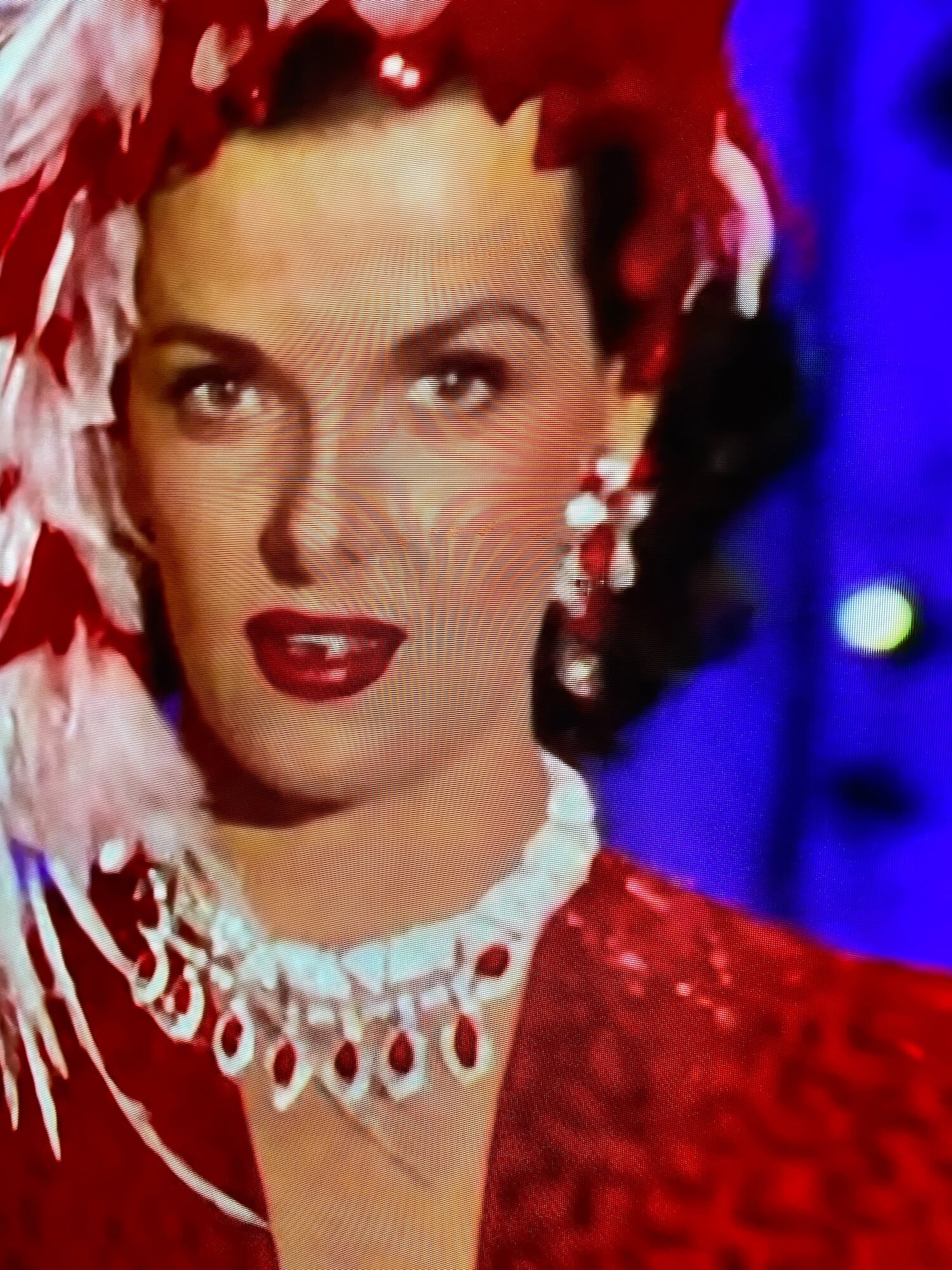
Both the Red Drop Necklace and the Triangle Link Necklace were difficult to interpret from the available material. Details were obscured by lighting, costume movement, and camera angles.
By closely studying how the pieces moved during the dance sequence, we determined that the design consisted of two separate necklaces worn together, rather than a single constructed piece. This helped us decide to recreate them as individual components.
Triangle Link Necklace:
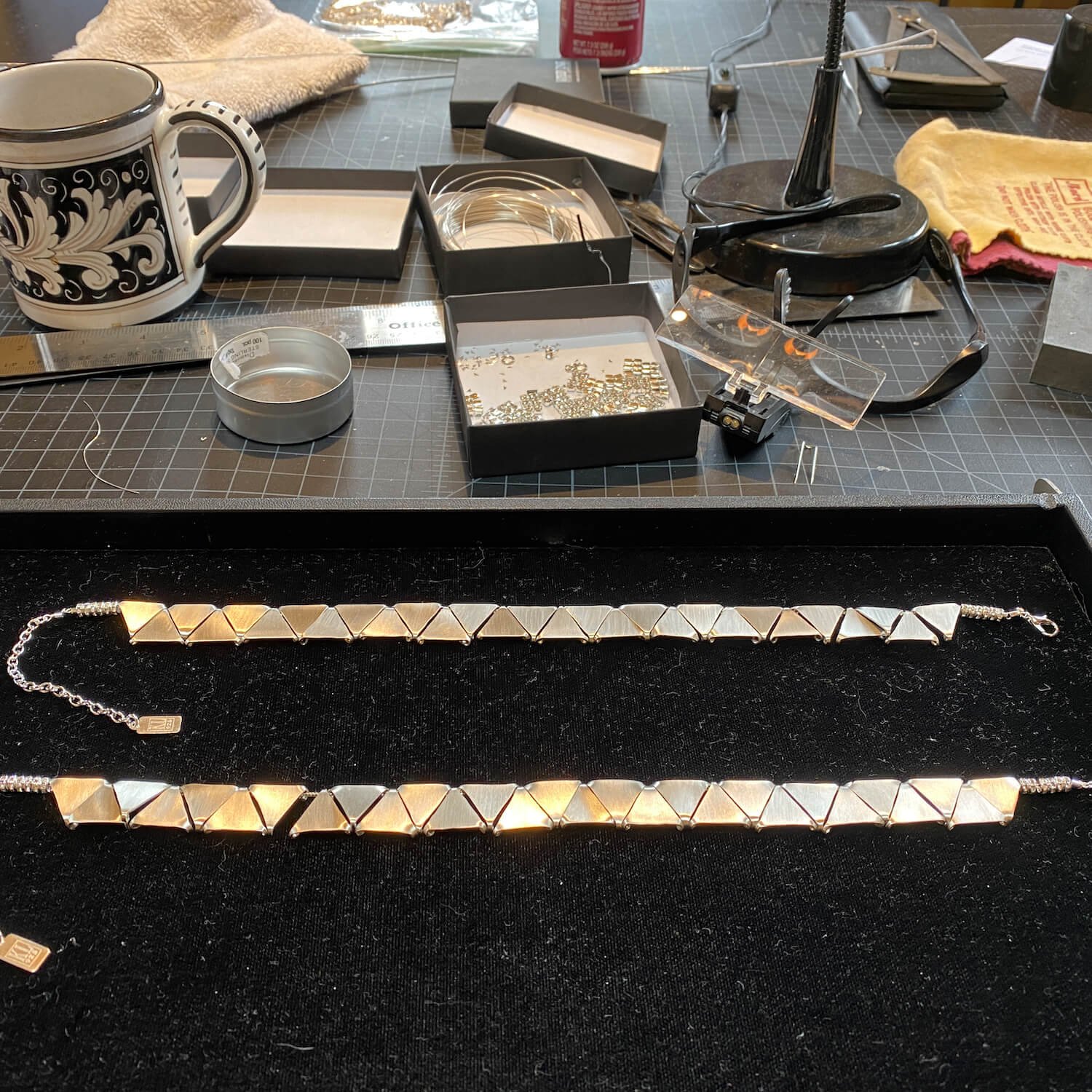
The Triangle Link Necklace appears to consist of individual triangular links attached to a collar or chain. Because the design element was unusual and we could not locate a suitable component online, we decided to fabricate the links by hand.
Given the project’s time constraints, creating a carved master, making molds, and casting dozens of links was not feasible. Instead, each triangular link was hand-pierced from sheet nickel silver.
Nickel silver was selected because it retains its color and resists tarnishing, which allowed us to avoid the cost of rhodium plating. Each link was set with six rhinestones, producing a dramatic sparkle that closely matched the visual effect seen in the film.




Red Drop Necklace:
The Red Drop Necklace proved somewhat easier to construct than expected. After an extensive search, we located navette-shaped drops in the exact size required, which were set with Siam-red stones matching the color seen on screen. Finding these components was critical as their size and shape define the overall look of the necklace.
The next question was how the navette drops were connected. Observing the dance sequence carefully, we noticed that the drops moved freely as the performers moved, indicating that they were not rigidly attached to a collar.
To recreate this movement, we used a foxtail chain, the same chain used for the Triangle Link Necklace. Rhinestone rondelles were threaded along the chain to increase the brilliance of the piece and provides just the right look we were after.


Girandole Earrings
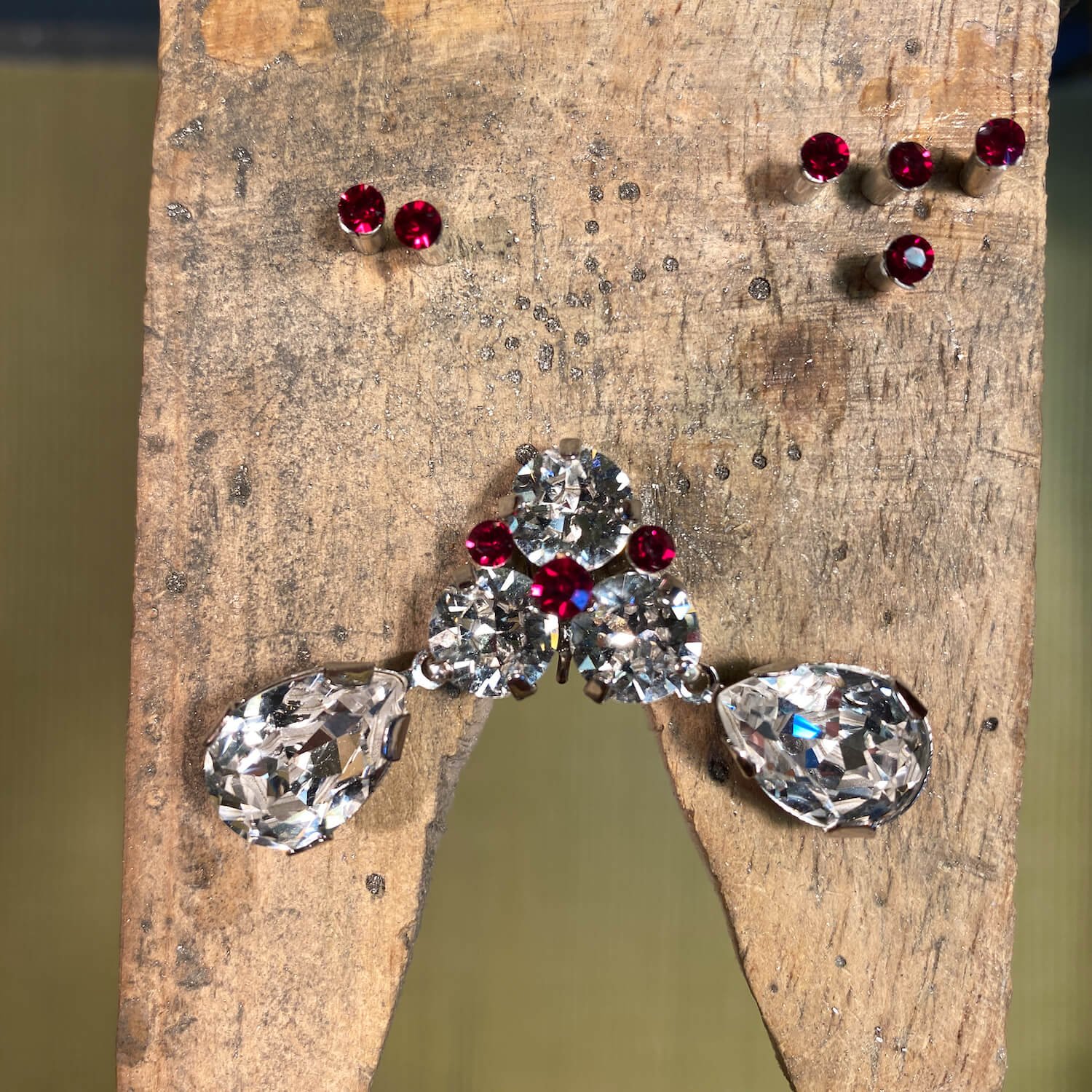
Based on historical research, we identified the earring style as closely related to the girandole form. A Girandole Earrings design is typically characterized by three suspended stones, with the center drop positioned slightly lower than the two flanking stones. The upper portion of the earring often includes a larger round stone, sometimes connected by a bow, knot, or other decorative element.
While the original film earrings are not fully visible in detail, this structure closely aligns with what can be observed in the available footage and reference images, and served as the basis for our interpretation.
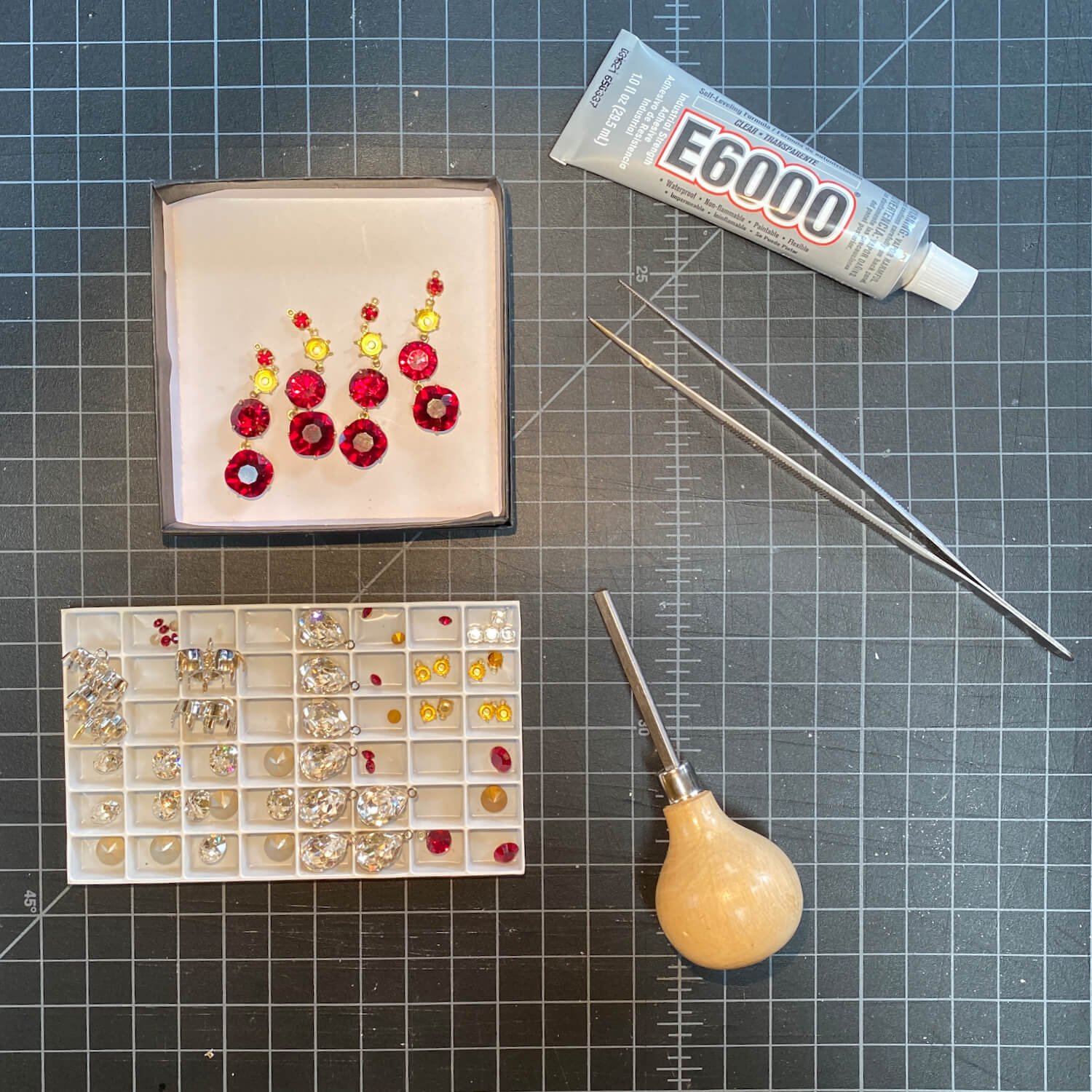
For the earrings we were able to source ready-made settings that closely matched the scale and structure required. These components just needed some minor modifications - reoriented, adjusted, and soldered where necessary.
The red stones, in particular, were difficult to source, as the color needed to match the distinctive Siam red tone seen in the film. Ultimately, we selected Swarovski elements to achieve the appropriate depth and saturation.
Based on our analysis, it is likely that the original earrings were also studio-assembled, rather than fully custom-fabricated from scratch. Their construction suggests a practical approach consistent with mid-century Hollywood costume departments, combining available components with modifications. They look and perform just as the originals designs.



Hip Brooch


The most challenging piece to recreate for this project was the hip brooch. Based on the reference images, it became clear that at least two versions of the brooch were used in Gentlemen Prefer Blondes.
One version—worn during the dance sequence—appears simpler in form, with softer, less pronounced points. A second version, seen in non-dance scenes, is more elaborate and sharply defined. These differences suggest that the production utilized multiple variations of the same design to accommodate both performance and visual impact.
From our analysis, we believe the original dance-version brooch was likely constructed as a fabric appliqué, rather than a heavy metal piece. A rigid metal brooch of that scale and shape would have been impractical and potentially unsafe for a high-energy dance number.
To better understand the scale of the piece, we requested precise measurements from the Academy Museum of Motion Pictures. The available images did not provide enough clarity to accurately determine its size, making this step essential to the design process.


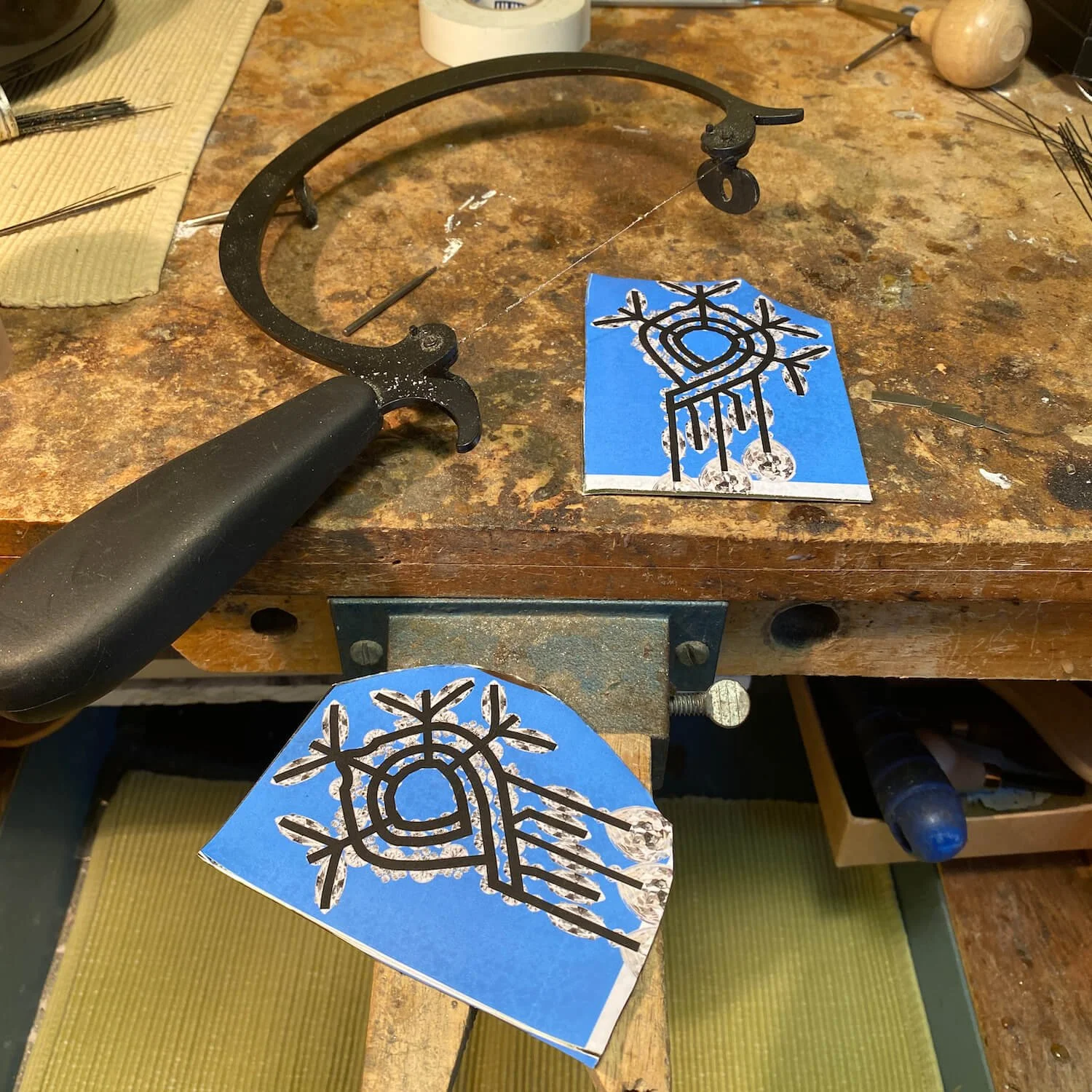
With the design established, we developed a precise layout digitally before transferring the pattern onto sheet metal. The form was then hand-cut from nickel silver, allowing us to achieve the required shape while maintaining control over scale and detail.
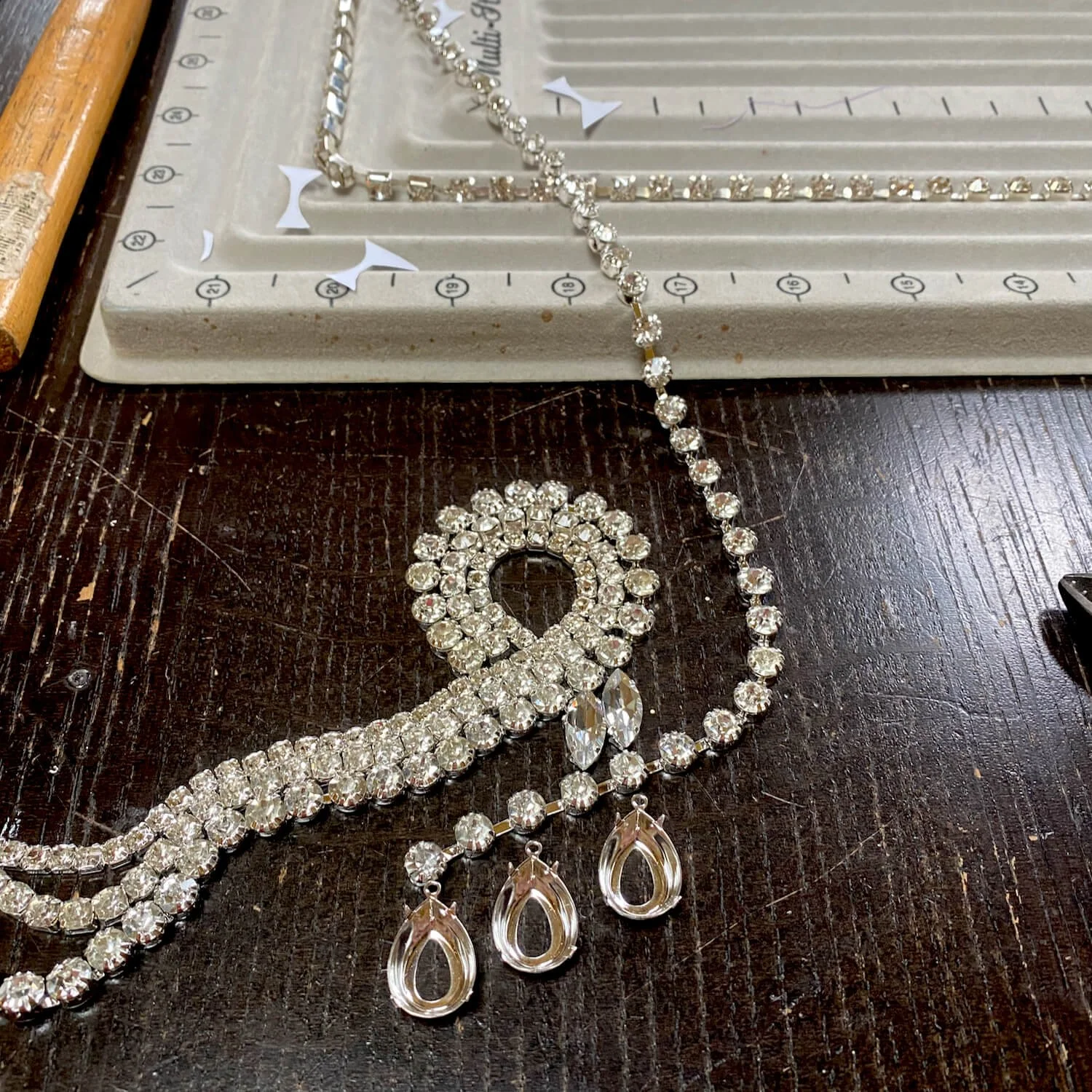
Once the framework was completed and polished, the rhinestones were carefully soldered into place. Additional rhinestone dangles were incorporated to replicate the movement and visual effect seen in the film.
To ensure the piece could be securely attached without damaging the costume, the finished hip brooch was mounted using magnets rather than traditional pin findings. This approach provided stability while preserving the integrity of the garment.




Wrist Wraps
The wrist wraps were among the most enjoyable elements to fabricate for this project.
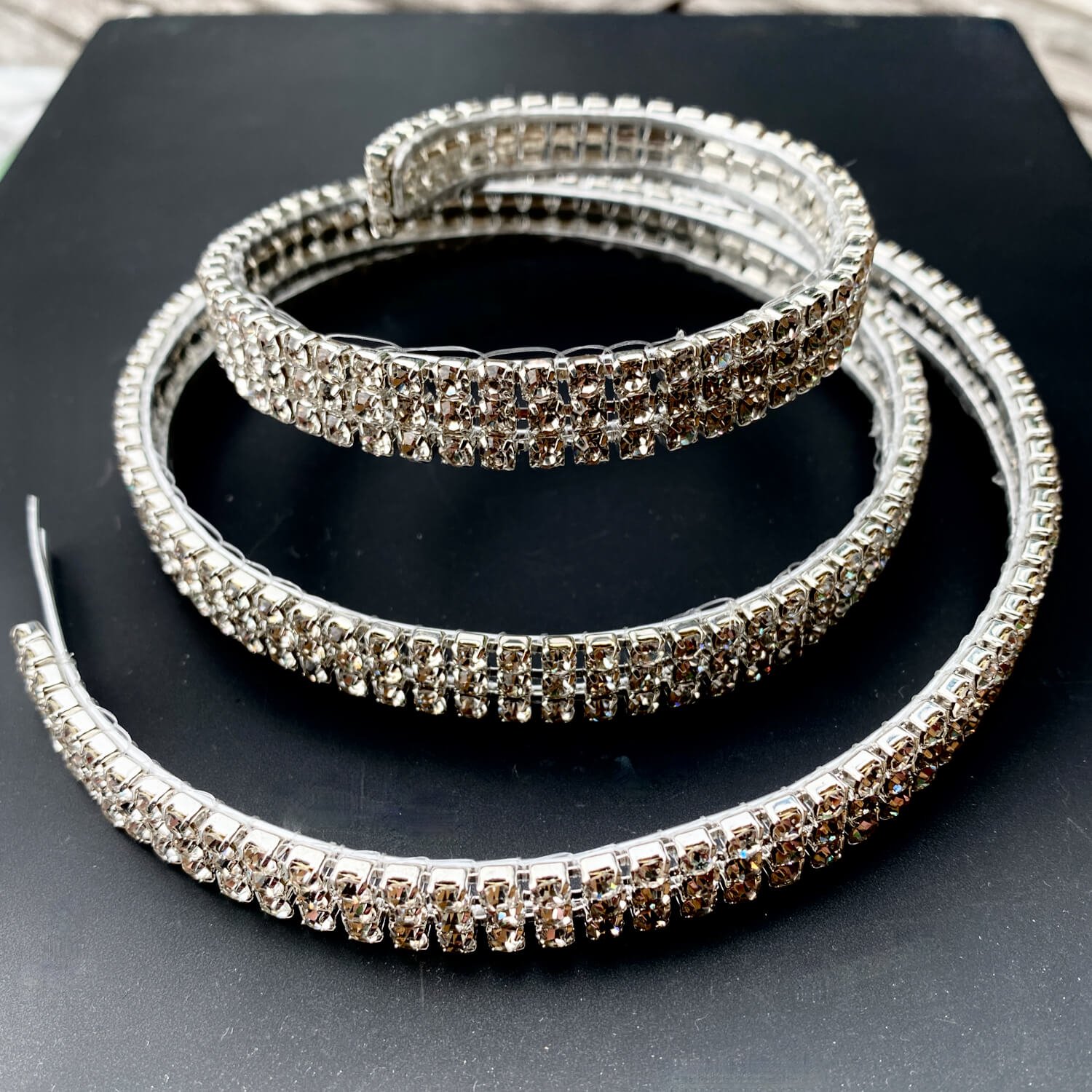
Each piece was constructed using triple strands of rhinestones, carefully wired to a lightweight aluminum framework. Special attention was given to ensuring that no part of the structure would come into contact with or damage the costumes. All edges were finished to be smooth and non-abrasive.
The aluminum framework was engineered to maintain its shape while allowing the rhinestone strands to “float” just above the sleeves, preserving both the visual effect and the integrity of the garments. Avoiding direct contact with the costume was a critical requirement throughout the design.



Cuff Bracelets

Image from Academy Museum of Motion Pictures - clipped from the film to show the two cuffs.
The cuff bracelets were a late addition to the project. On the day before delivery, we decided to create a pair to complement the overall presentation of the costumes.
While not part of the original commissioned project, the cuffs were developed to enhance the visual impact of the full jewelry set. Fabricated within a short timeframe, they reflect the same materials and techniques used throughout the project, resulting in pieces that integrate naturally with the overall aesthetic.
Although they differ from the original film jewelry, they remain a favorite outcome of the process—demonstrating both flexibility in design and the creative opportunities that can emerge even under tight deadlines.


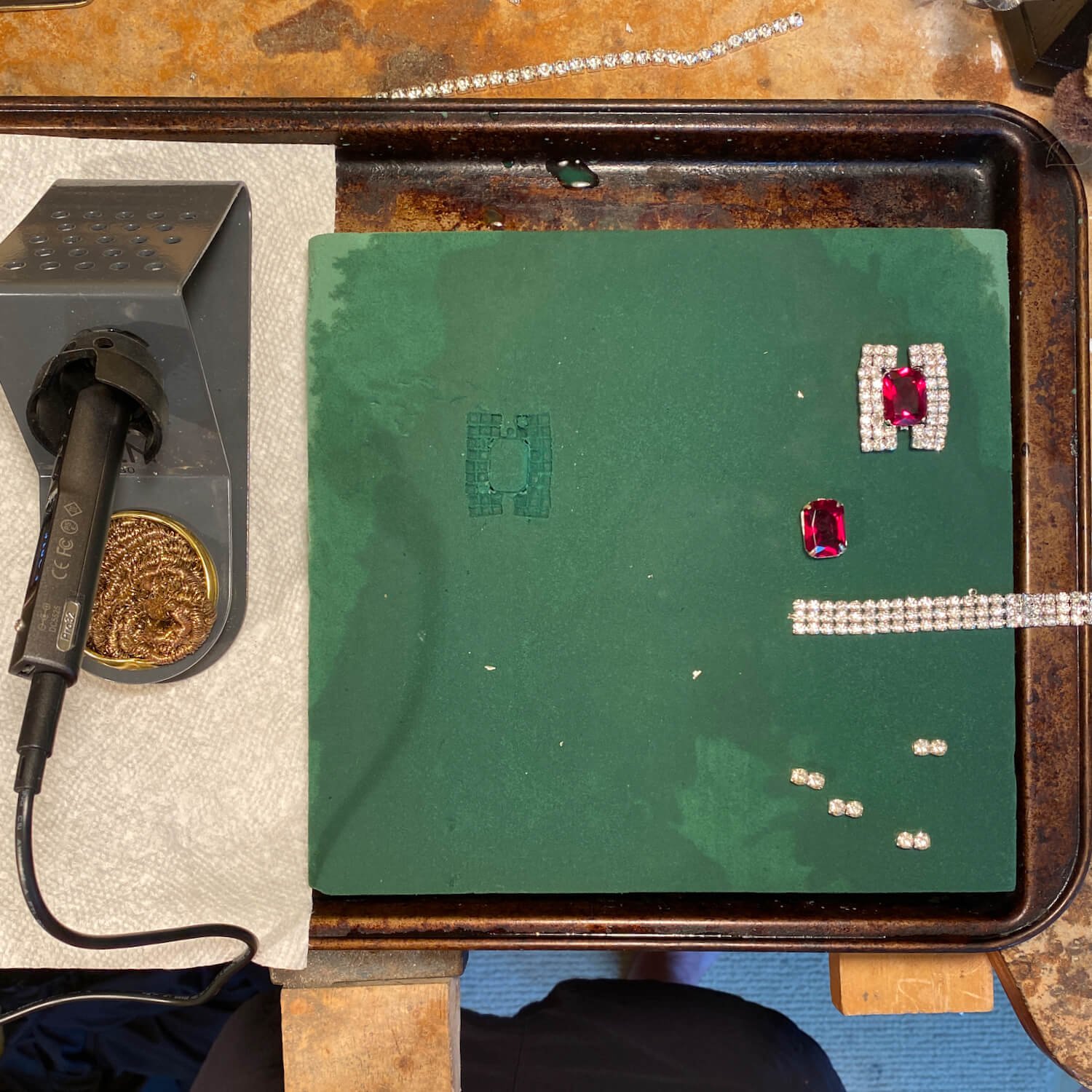


This project allowed us to further refine our approach to soldering rhinestone settings, particularly in achieving secure placement while preserving stone clarity and brilliance.
One useful discovery during fabrication was a heat-resistant green foam board, typically used in electronics soldering. This material proved highly effective for jewelry work, as it helped dissipate heat while also supporting the curved shapes of the settings during assembly.
Finished Pieces - Off to Hollywood!
With the project complete, we captured our own studio images of the finished pieces, documenting the full jewelry set before delivery to the Academy Museum of Motion Pictures. While time did not allow for a professional photoshoot, the images showcase the craftsmanship, detail, and historical accuracy of each piece.
This project highlights the vital role of replica jewelry in museum exhibitions—not merely as decorative accents, but as essential elements in preserving, interpreting, and communicating design history. Each piece contributes to the story of the costumes and allows viewers to experience the glamour and artistry of classic Hollywood firsthand.



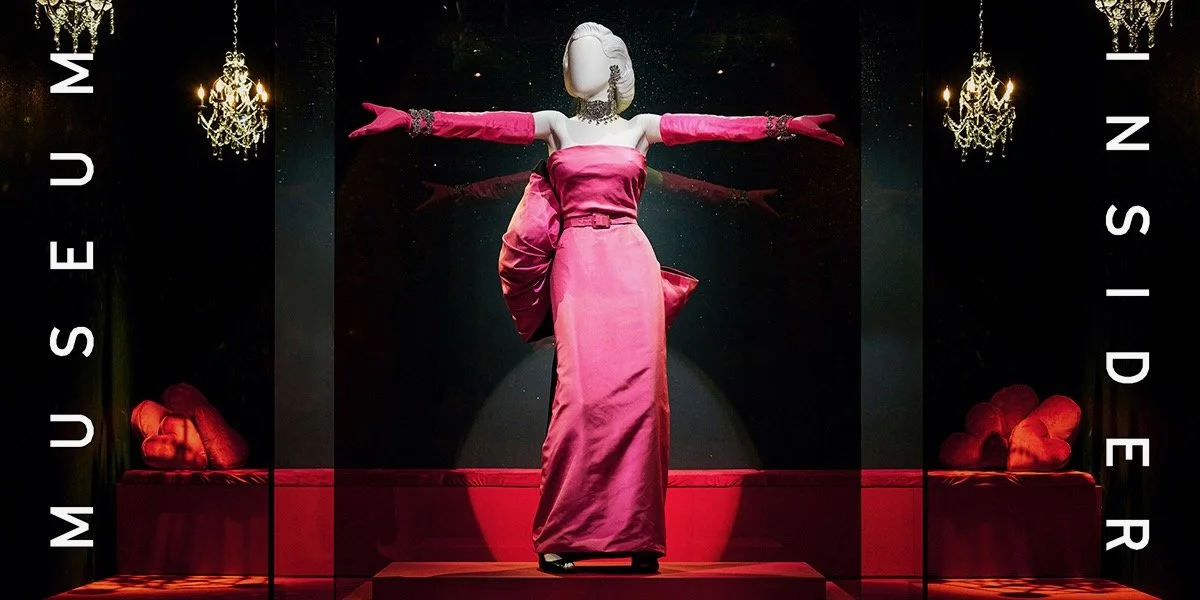
Academy Museum - Opening Night

Taken by the Academy this image shows the costumes worn by Monroe and Russell with our custom costume jewelry, just before the glass window was installed.

The invitation!


Monroe and Russell Jewelry